
 Nile Cruise
 Cruise Ship


Testimonials
Our Clients Reviews
See what our happy travelers say about us


A flight over Luxor at sunrise is one of the most spectacular travel experiences in Egypt — floating silently above the world’s greatest concentration of ancient monuments as the sun rises over the eastern desert hills, the Nile turns gold, and the temples and tombs of the Theban west bank emerge from the morning shadow below. Luxor has the largest concentration of hot air balloon operators in Africa, with dozens of balloons ascending daily in the pre-dawn hours from the west bank fields, creating a visual spectacle of colored balloons rising against the pale sky that is itself photographically extraordinary.
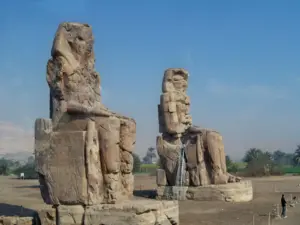
The flight typically lasts 45–75 minutes, beginning before sunrise and landing as the sun rises fully above the eastern cliffs. From the basket, passengers look down on the Valley of the Kings, Hatshepsut’s Temple, Medinet Habu, the Ramesseum, the Colossi of Memnon, and the agricultural patchwork of the Nile floodplain — the entire west bank monument complex visible simultaneously in a way impossible from any ground-level viewpoint. The Nile glitters below, with the temples of Luxor and Karnak visible on the east bank in the rising light.
The balloon experience requires an early morning start — collection from hotel at approximately 4:00–4:30 AM, crossing to the west bank, and inflation and launch as the sky begins to lighten. The landing can be in any of several west bank fields depending on wind direction, followed by a traditional champagne (or juice) toast and vehicle return to the launch point.
Hot air balloon tourism at Luxor began in the 1990s and grew rapidly as operators recognized the unique combination of geography — the flat west bank agricultural plain adjacent to the monument zone, consistent early-morning wind conditions, and the visual spectacle of the monuments from altitude. At its peak before the 2011 Arab Spring disruption, over 50 balloons operated daily from Luxor.
The industry has experienced several serious accidents, including a 2013 crash that killed 19 passengers — the worst balloon accident in Egypt’s history. Following the accident, the Egyptian government introduced stricter safety regulations covering balloon airworthiness, pilot licensing, and weather condition requirements for flight authorization. The regulatory environment has since improved, though standards still vary between operators.
The sky transitioning from deep blue through pink and gold as the sun clears the eastern desert cliffs — the most atmospheric moment of the Luxor balloon flight, with the monument zone emerging from shadow below.
The Valley of the Kings, Hatshepsut's Temple, and Medinet Habu all visible simultaneously from above — a perspective of the west bank monument complex impossible to achieve from any ground-level viewpoint.
The visual spectacle of dozens of colored balloons ascending simultaneously from the west bank fields — a photographic subject in itself, especially in the golden light of early morning.

See what our happy travelers say about us



